Sintered Stone Furniture: What It Is, How It Compares, How to Care for It
Almost every coffee table and TV cabinet is advertised as sintered stone these days, yet thickness, frame construction and finish vary widely — and so does the price. This guide from the MUXI stylist team covers what sintered stone actually is, how it differs from natural marble and solid wood, the three things to check before buying, how to get the sizing right, and how to care for it once it is home.
What Is Sintered Stone, and How Does It Compare?
Sintered stone is a porcelain-type slab made from natural mineral raw materials under high heat and pressure. The pattern is printed before firing and becomes part of the slab, which leaves a dense surface that resists penetration. The travertine and marble looks you see are produced this way — they are not the veining of natural stone.
That is also the key difference from natural stone. Marble veining is one of a kind, but its natural pores make it prone to staining from coffee, soy sauce or essential oils, and it reacts to acidic liquids. Sintered stone gives up that one-of-a-kind character in exchange for being easy to live with.
| Material | Scratch resistance | Heat | Staining risk | Pattern origin | Weight |
|---|---|---|---|---|---|
| Sintered stone | High; everyday use rarely marks it | Heat resistant | Low; dense surface resists penetration | Printed, then fired | Moderate for thin slabs |
| Natural marble | Medium-high, but reacts to acids | Heat resistant | High; natural pores stain | Natural, unique to each slab | Heavy |
| Quartz | High | Medium; prolonged heat may discolour | Low | Even, granular | Heavy |
| Glass | Low; fine scratches show | Medium | None | Clear or frosted | Moderate |
| Solid wood | Low; dents and water marks | Low; sensitive to heat | Medium; needs oil or lacquer | Natural grain | Moderate |
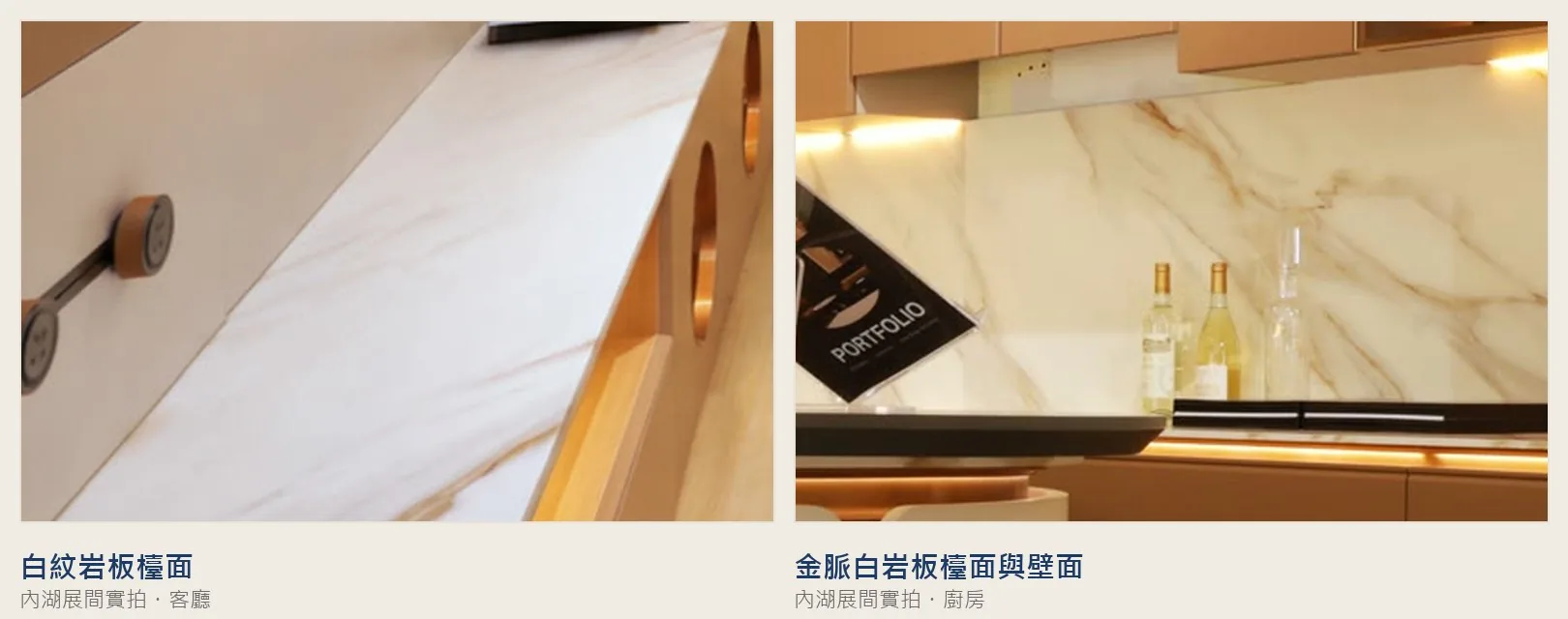
Why It Suits Coffee Tables and TV Cabinets
The living room takes the heaviest use in the home, and the coffee table surface absorbs most of it: hot drinks, takeaway sauces, essential oils, children's crayons, pets jumping up and down. Those are hard on glass and solid wood, and comparatively easy on sintered stone — which is why it has become the default living-room top.
On our pieces, the top is specified as resistant to acid and alkali penetration, resistant to abrasion and scratching, and heat resistant — matching exactly those everyday situations.
- Hot drinks and food are fine, though we still suggest a coaster or trivet so heat is not concentrated on one spot
- Spilled alcohol, oils and sauces wipe away without leaving marks
- Pet scratches show far less than they would on glass or wood
- No periodic oiling, unlike a solid wood surface
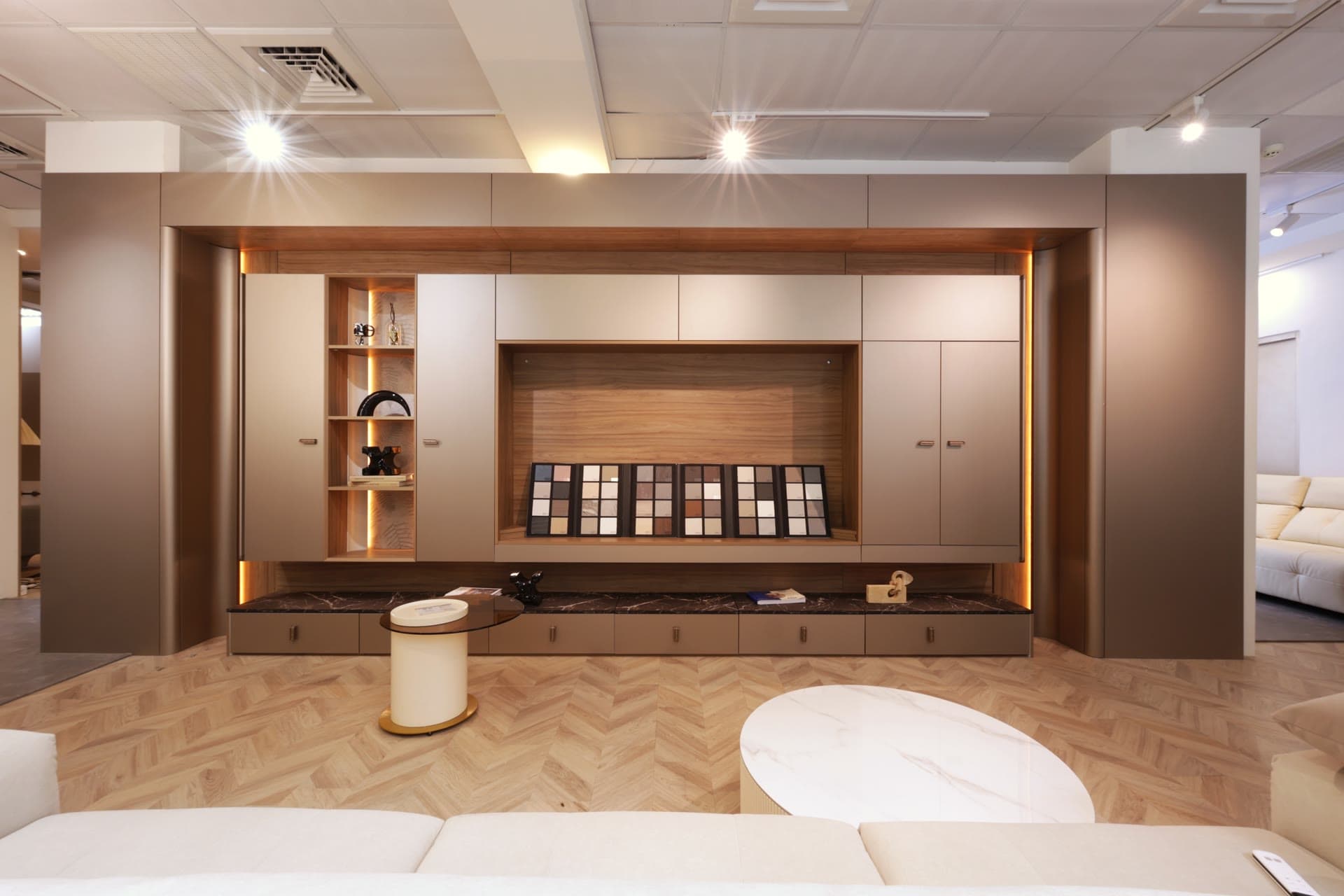
Three Things to Check: Thickness, Frame, Finish
The words "sintered stone" alone tell you little. What holds the slab up, and what surrounds it, decides whether the piece stays solid over years — and explains most of the price difference.
- Thickness: 12mm is the common specification. It affects the visual weight of the edge and how it is rounded, as well as overall stability
- Frame: the structure beneath the top carries the load. E0-grade multi-layer wood frames and steel frames are both common; what matters is load performance and staying true over time
- Finish: natural veneer and printed foil look similar from a distance but differ in feel and durability. Our solid wood guide covers that difference
- Edges: concentrated impact on a corner is the real weak point, so rounding and edge detailing matter — especially with children at home
Getting the Size Right
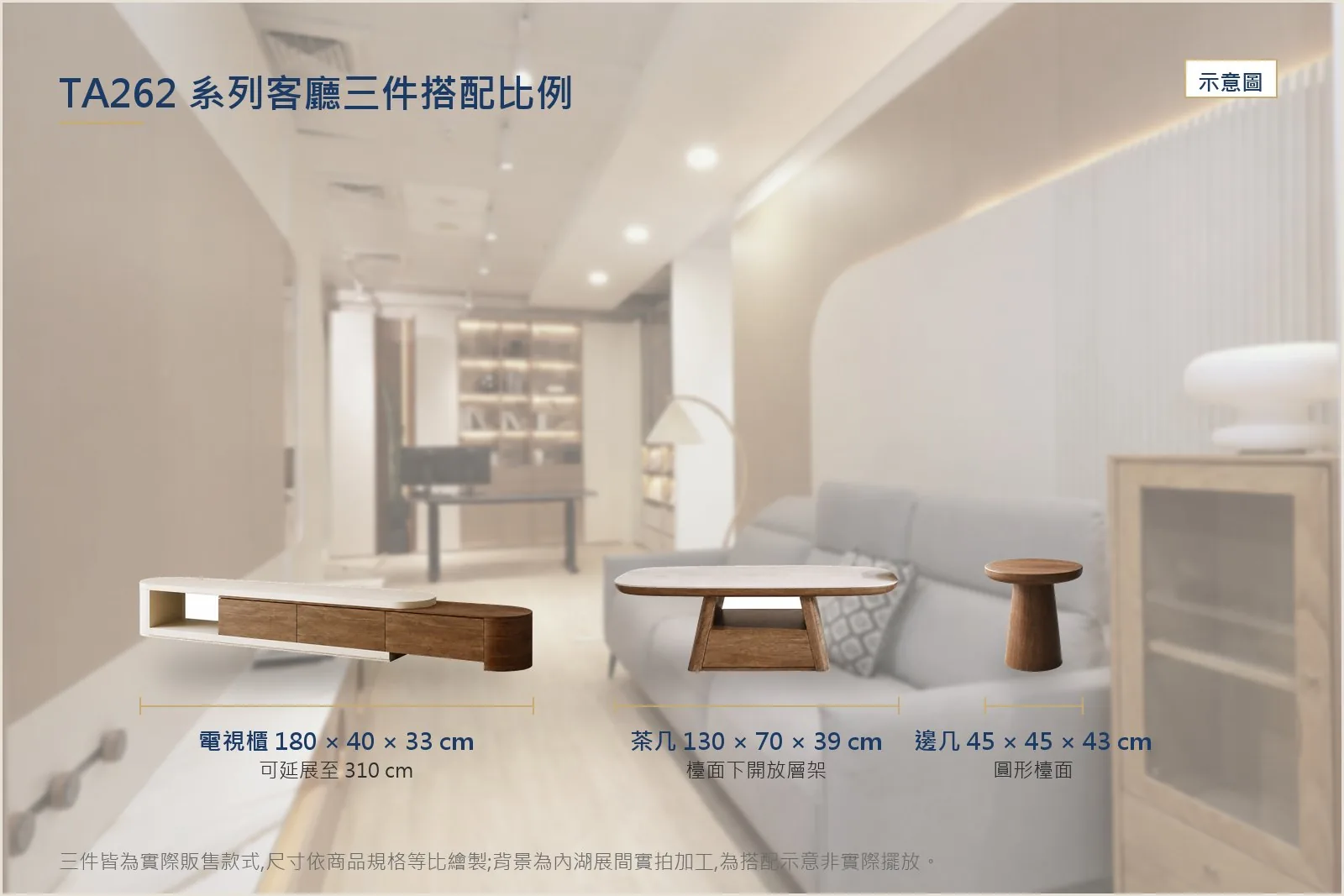
The right material still needs the right dimensions. Each of the three living-room pieces — coffee table, side table, TV cabinet — has its own rule of thumb.
- Coffee table height: commonly 33–39 cm, ideally at or just below the sofa seat height
- Coffee table length: roughly two thirds of the sofa reads best
- Walkway: leave 35–45 cm between the sofa front and the table so people can pass
- Side table: keep it close to armrest height so a glass or phone is within reach
- TV cabinet: depth is usually around 40 cm; for extendable models check the fully extended length, not the closed dimension
- Hand measurement carries a 3–5 cm tolerance, so confirm final dimensions and placement with a stylist before ordering
Care and Moving: Four Details People Miss
Sintered stone is easy to care for, but not maintenance-free. Damage usually comes from how a piece is cleaned or moved, not from daily use.
- Clean with a neutral detergent and a soft cloth; avoid steel wool, scouring powder and strong acids or alkalis
- Still use a trivet, so high heat is not held on one small area for long
- Lift the whole piece level when moving it — never tilt it onto one edge or grip a single corner
- For modular and extendable models, check that rails and hardware are locked before moving; dragging loosens the structure
Sintered Stone: Common Questions
Will a sintered stone coffee table crack?
The material is hard, and placing or wiping things on it rarely causes damage. The real risks are concentrated impact on a corner and uneven load while being carried. Lifting the piece level and keeping clear of wall corners and door frames is the most effective prevention.
Can I put a hot pot or cup straight on it?
Sintered stone is heat resistant, so everyday hot drinks and food are not a problem. We still suggest a coaster or trivet — not because the material cannot take heat, but to avoid holding high heat on one small area.
Sintered stone or solid wood — which suits me?
It depends on how you live. If there are hot drinks, takeaway, children or pets and you clean often, sintered stone is less work. If you love the feel and grain of timber and don't mind regular care, solid wood has a warmth stone cannot match. They also combine — one of our pieces sets a sintered stone disc into a wood-veneer top.
Is 12mm thick enough?
12mm is the usual specification for coffee table and TV cabinet tops. Read it together with the frame: with a sound frame and sensible spans, 12mm handles living-room use comfortably. Conversely, a thicker slab on a weak frame will still develop problems.
Can scratches or a chipped corner be repaired?
Fine scratches are unlikely in the first place. For a chipped corner, whether it can be repaired invisibly depends on the location and size, so send a photo to a stylist for an assessment before deciding how to handle it.
Is it heavy? What should I check before delivery?
A thin sintered stone slab is lighter than natural stone, but the finished piece with its frame still has weight. What matters most is the delivery route: lift size, stair corners, doorway and hallway widths. Measuring those before ordering avoids discovering a problem on delivery day — our delivery and inspection guide has the full checklist.
Related Guides
Want to see the texture in person?
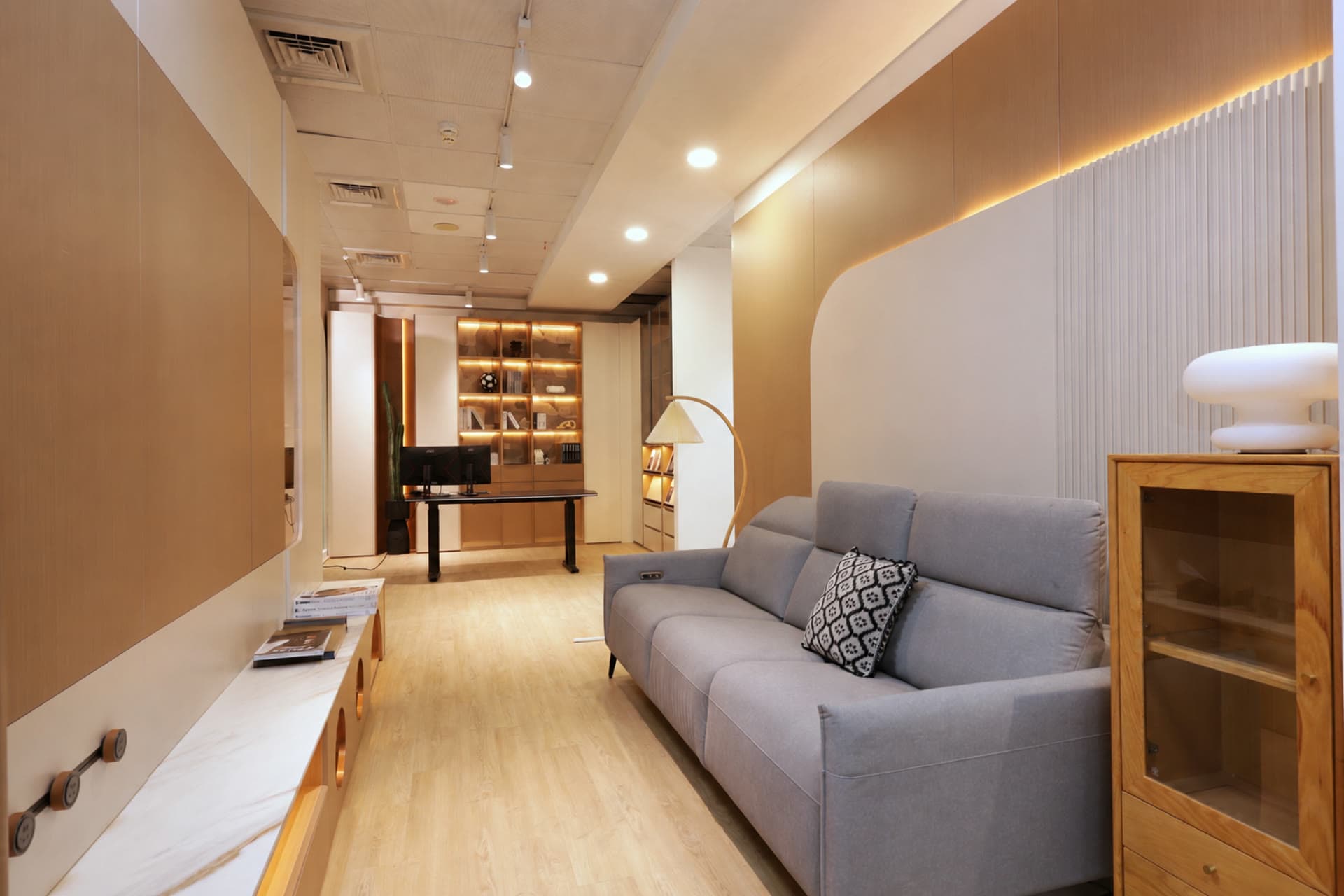
Pattern depth, the matte level and how the edges feel are best judged in person. Visit the MUXI showroom in Neihu, or message us on LINE and a stylist will suggest sizes for your space.